Nothing makes learning more fun than Obsidian. If you aren’t already familiar, Obsidian is a lot of things: a markdown editor, a knowledge base, a personal wiki, a community and more. It is an incredibly flexible piece of software that has had more of an impact on me than any other because it makes everything I do more enjoyable.
At its core, Obsidian is a notetaking app. It is built around creating and editing markdown files. Its foundational feature is that you can link notes together just by mentioning them in the text, similar to how Wikipedia articles link to other Wikipedia articles. The first implication of this is that it allows notes to be atomic; you don’t ever need to repeat context in your notebook when you can easily link back to the source. Secondly, it means that just by writing you are creating a knowledge graph.
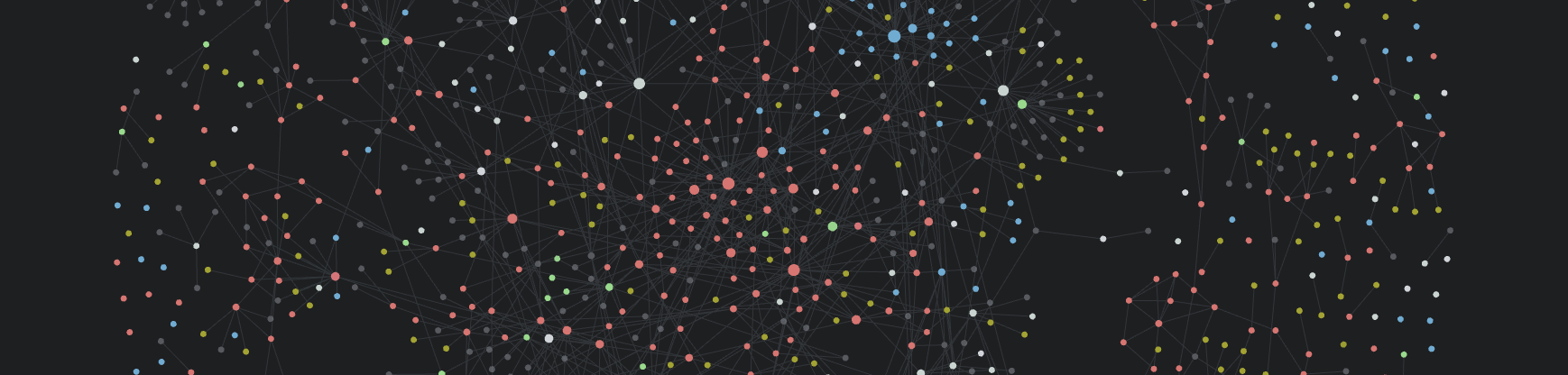
Although I used to think of the graph view as a bit of a vanity feature, it is the hook for many new users, and personally, I find it fun to watch it grow. It is simply a knowledge graph made from all of your notes, where links between notes become edges. It’s cool to see how subjects naturally group together and grow over time.
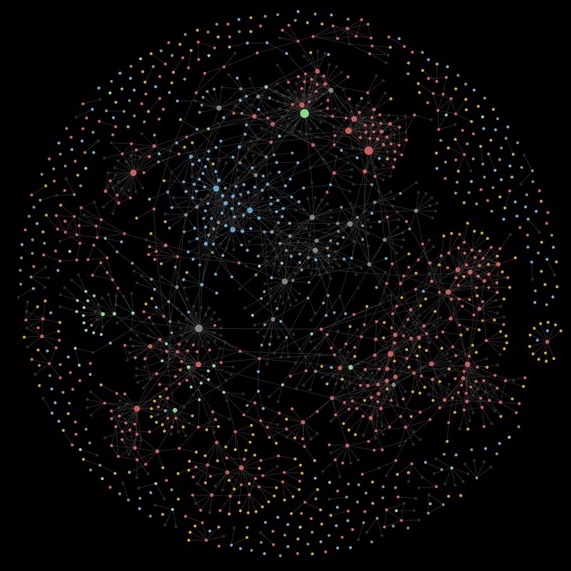 A screenshot of my Obsidian vault following the completion of my Masters Thesis in 2026.
Adding to my vault makes learning feel so much more cumulative, as it lets you see an actual representation of your mind grow and become more connected.
It’s got an incredible community making plugins and themes. I’ve been a long time fan of the Primary Theme and more recently the Flexoki Theme; the ‘digital paper’ feel of both of them heavily inspired the current design of my website. Recently I found the Pocket Bird plugin which lets you add a pet bird to your screen. I know it sounds frivolous but it just makes taking notes more fun.
It is incredibly flexible. The Bases feature lets you seamlessly incorporate databases into your vault, linking to notes and external data. I’ve found this useful for keeping track of personal projects, and I’ve seen other people use it to organize textbooks/lectures/movies. Even all my blog posts are written in Obsidian! I just use a symlink to point to my website’s build directory and git repo to a folder in my Obsidian vault.
There is also something powerful about having all your personal notes, and general knowledge notes in one place. I can link from my personal life to higher scientific concepts and from experiences I’ve had to class notes and scientific studies. I don’t know if there is any real effect on your thinking but it feels as if it makes my life a lot less compartmentalized—in a very good way.
The only drawback I have is that I still love physical media. I still have journals I like to jot ideas down in but I don’t find it too difficult to separate the roles; I consider notes in Obsidian evergreen (as in I’ll always be editing them), and journal entries are static. Still, it would be nice if one day I could access all my physical journal entries from my digital vault effortlessly.
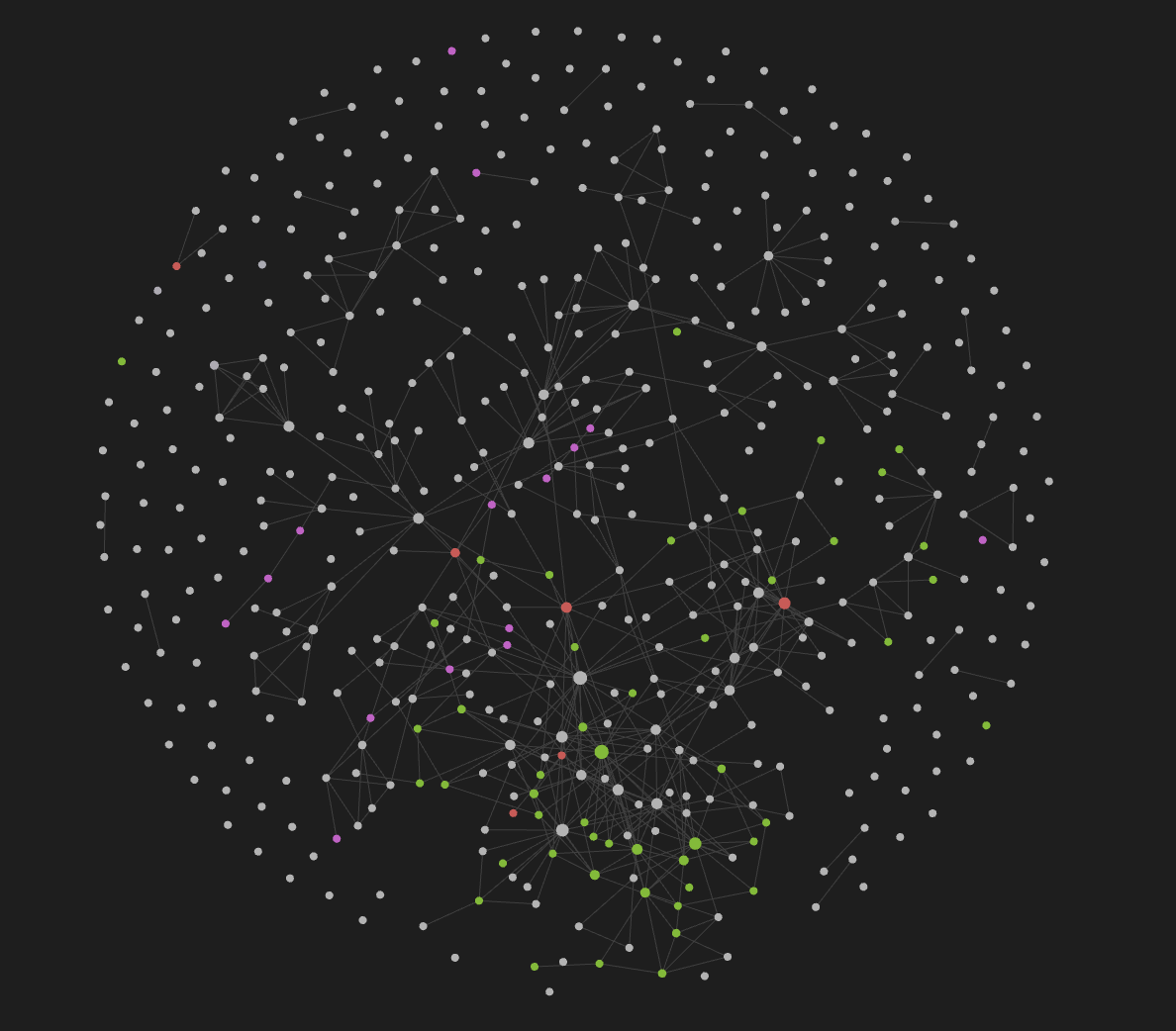 An earlier snapshot of my vault from 2023.
Somewhere down on my projects list is to train a graph neural network on a corpus of Obsidian vaults. I think it could be incredibly useful as a plugin for finding gaps in knowledge or connections that users might be missing. As deep learning continues to improve, the benefit of having a personal knowledge network will continue to increase. Some Obsidian plugins like Smart Connections use Doc2vec models and text embeddings to find new connections between your notes. Andrej Karpathy recently proposed using LLMs to create and manage wikis—while I’m reluctant to ever let an LLM generate writing in my personal vault, the idea is still fascinating.
Anyway, I just wanted to share my enthusiasm for Obsidian. If you somehow hadn’t heard of it yet I hope I convinced you to check it out.