May 2021
Puget Sound IEC Fusion Reactor Project
Bridging computer science, engineering, and experimental physics to build a fusor.
Puget Sound Fusion Reactor Project
During 2021, I joined a group of eight other students to work on one of the most exciting projects I’ve ever been a part of: building a nuclear fusion reactor. Specifically, an inertial electrostatic confinement (IEC) reactor, or “fusor” for short. By the time I left this project, we had successfully recorded elevated neutron output from our fusor, proving that it was converting hydrogen into helium via the exact same process powering the sun.
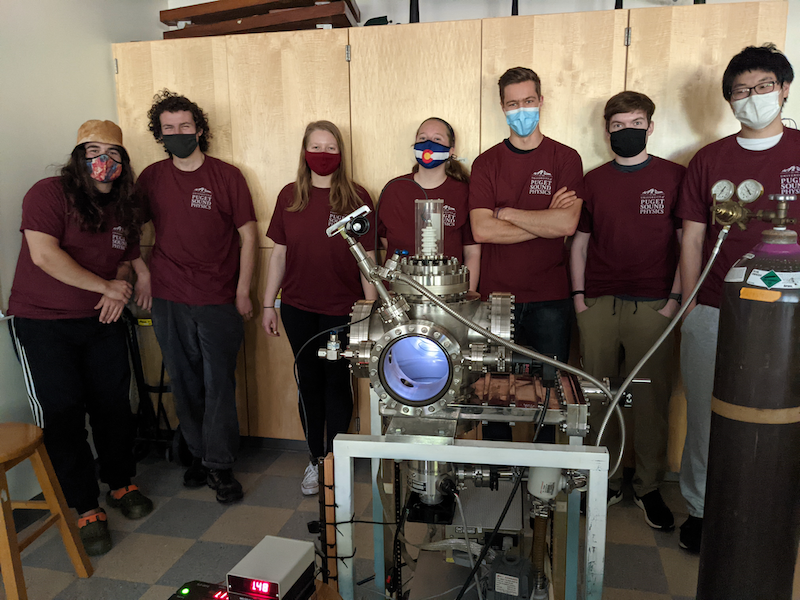 The Puget Sound Fusion team with the reactor turning helium gas into plasma.
For a while, our endeavors were documented on upsreactor.com. However, as the project has been finished for quite some time, the website is no longer available. Hence, I wanted to document the project along with my contributions here for any future fusioneers who may need assistance.
At the end of the project, the eight students plus our project leader had been added to the fusor.net fusioneer list as evidence of our accomplishments. I want to mention that fusor.net is the absolute best place to find information and get guidance for a project like this; it was a massively important resource for our team from start to finish.
What is a fusor?
Nuclear fusion is the process of combining light atomic nuclei to form a heavier nucleus, releasing energy. Fusion is the exact nuclear process occurring within the core of our sun as it turns lighter elements into heavier ones. In our reactor, we were aiming for Deuterium-Deuterium (D-D) fusion. When two deuterium atoms fuse, there is a 50% chance of yielding a Helium-3 atom and a free neutron, and a 50% chance of yielding a Tritium atom and a proton.
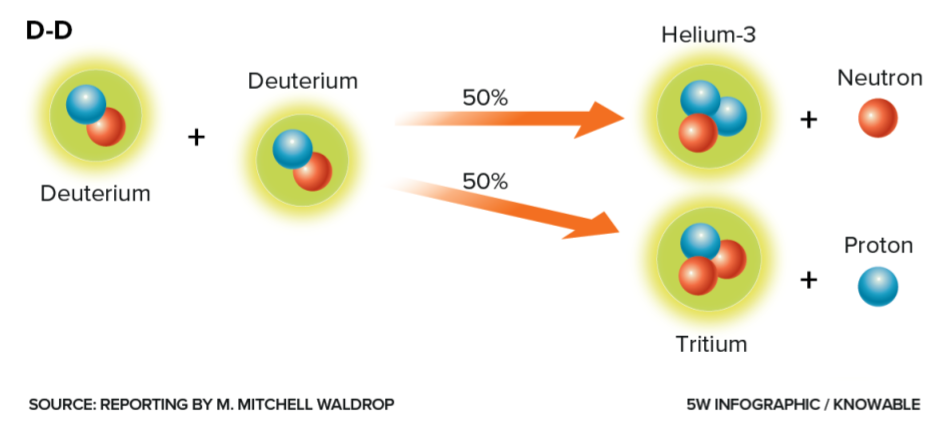 The two possible outcomes of a Deuterium-Deuterium reaction. Source.
An IEC fusion reactor uses an electric field to create what is called a negative potential well inside of a vacuum. When positively charged particles (ions) are introduced, they accelerate towards the center of the well at incredibly high speeds, causing them to collide and fuse. To achieve this, you need two things: a low-pressure vacuum (roughly 5 to 15 millitorr) and an electric voltage of around 30kV to 40kV.
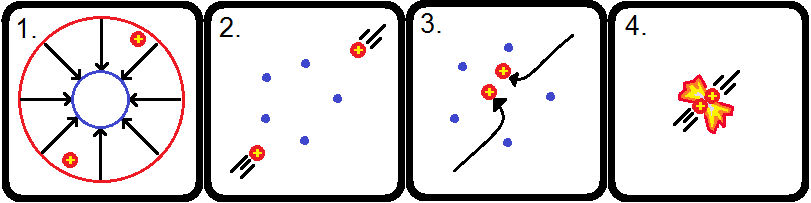 The mechanism behind an inertial electrostatic confinement fusor. The images depict ions being pulled to the center of a potential well and colliding. Source.
The first proof of a fusor is its ability to turn helium gas into plasma. This requires less electricity and pressure; additionally, it doesn’t require valuable deuterium nor does it produce any harmful radiation, making it a much simpler first step in the path to fusion. It was an essential proof of concept to show the internal systems were working. During the actual nuclear process, no visible light radiation is emitted. Furthermore, the fusor must be heavily shielded to prevent exposure to radioactive outputs, meaning the only “images” of the reactor in progress are the data readouts on the neutron counters.
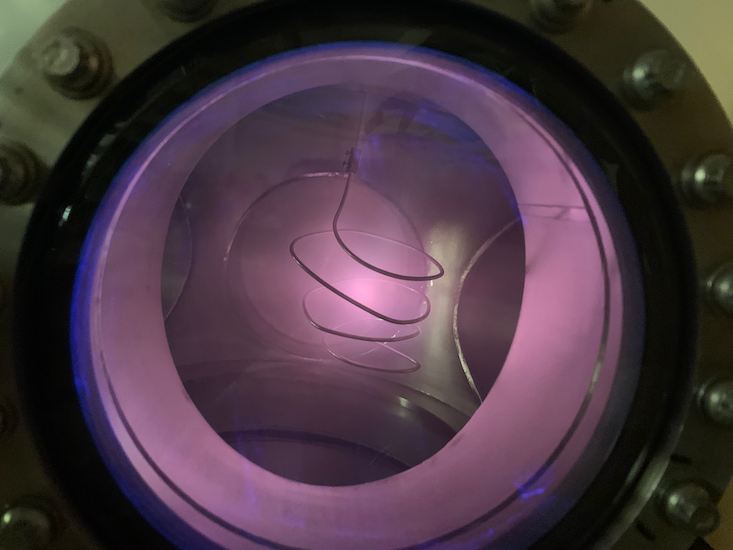
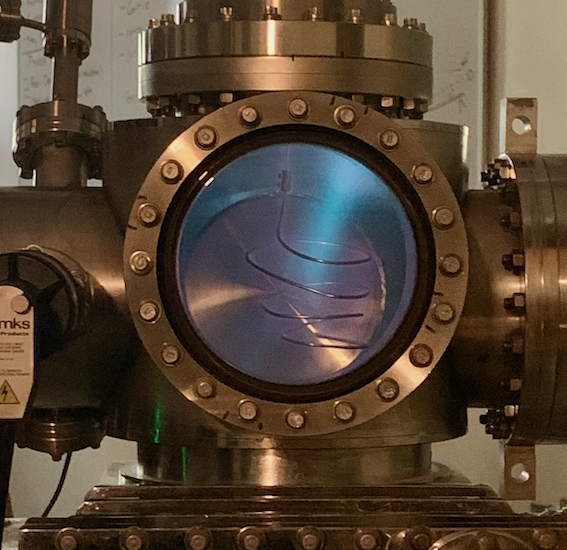
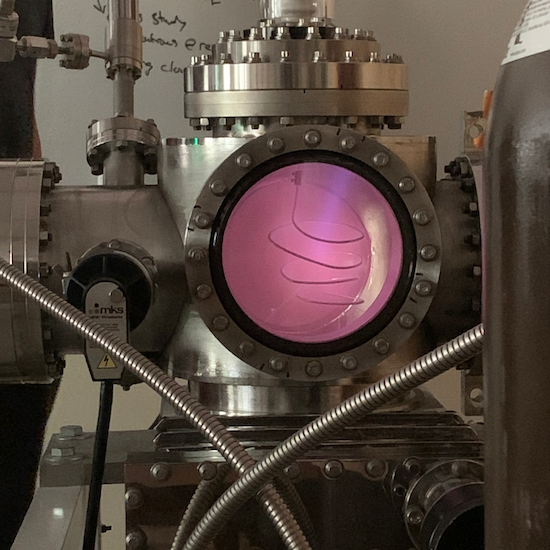
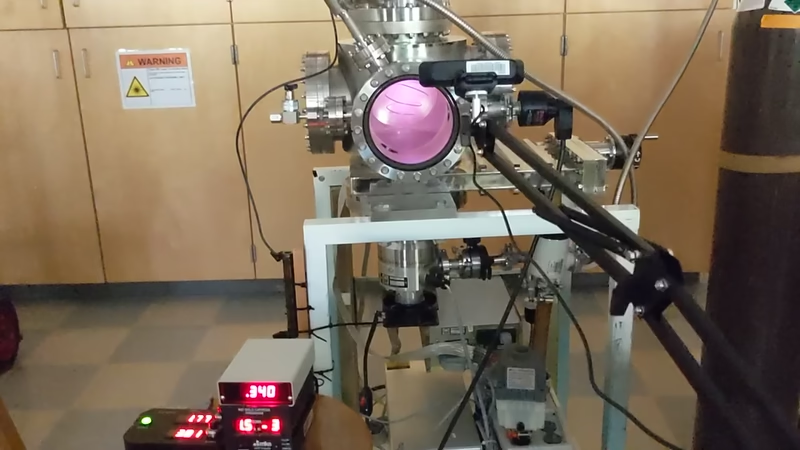 A demonstration of our fusion-producing plasma in a test run, which served as our submission to the Plasma Club. In the video you can see readings from the vacuum chamber and power supplies.
Design and Construction
Building the reactor was a significant undertaking that required expertise across multiple disciplines. We were fortunate to be gifted our vacuum chamber by a retiring professor, which provided a great foundation for the build.
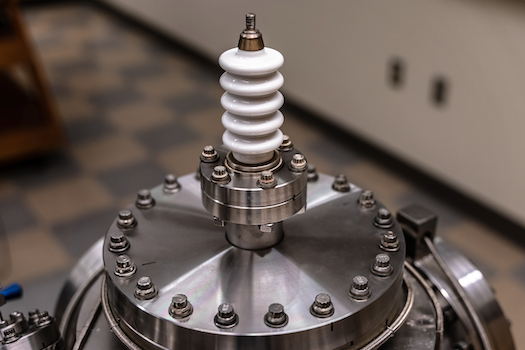
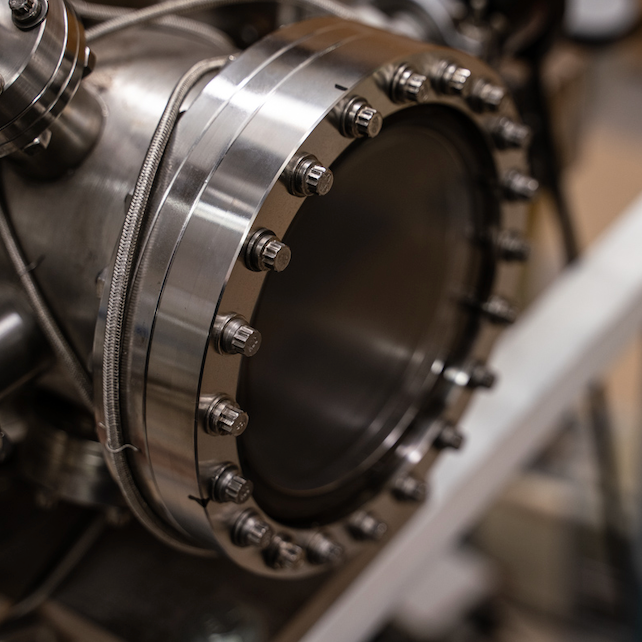
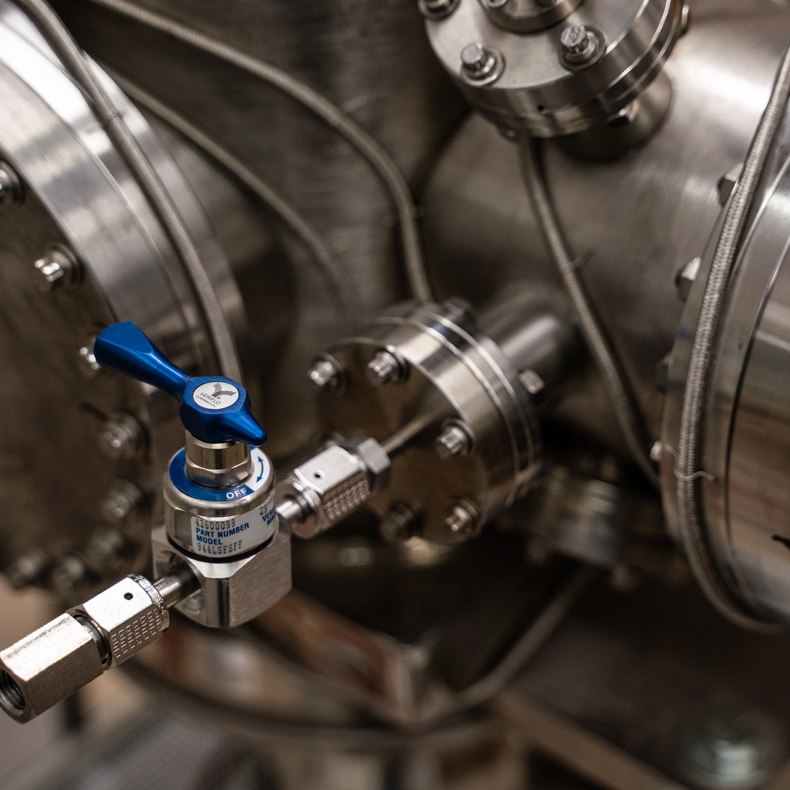
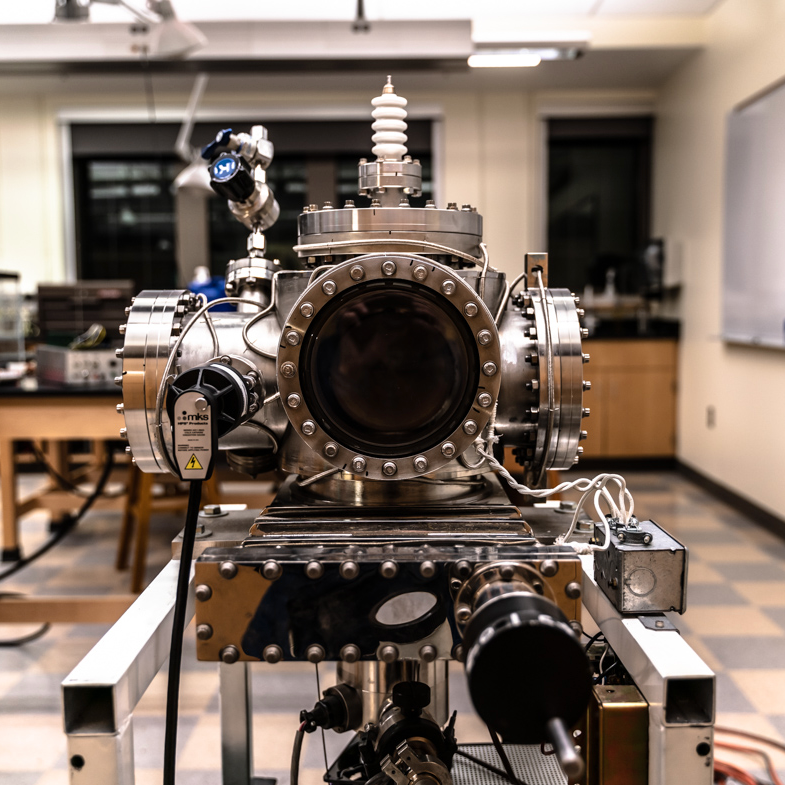
From there, the construction phase involved sourcing materials, assembling the vacuum system to maintain a pressure of 10⁻⁶ Torr, and testing the high-voltage circuits. Operating at 30kV+ requires careful insulation and cooling.
My Role: Control Systems and Safety
Since I am a computer scientist, not a physicist, my primary responsibilities centered around the control systems, automation, and safety mechanisms.
One of my main contributions was setting up the neutron detection counters. As mentioned earlier, D-D fusion yields a free neutron 50% of the time. Counting these neutrons was vital for two reasons: (1) it serves as definitive proof that nuclear fusion is actually taking place inside the chamber, and (2) neutron radiation is ionizing and a radiation hazard. By monitoring the neutron count outside the fusor we also verify that our shielding is working and we are not being exposed to radiation.
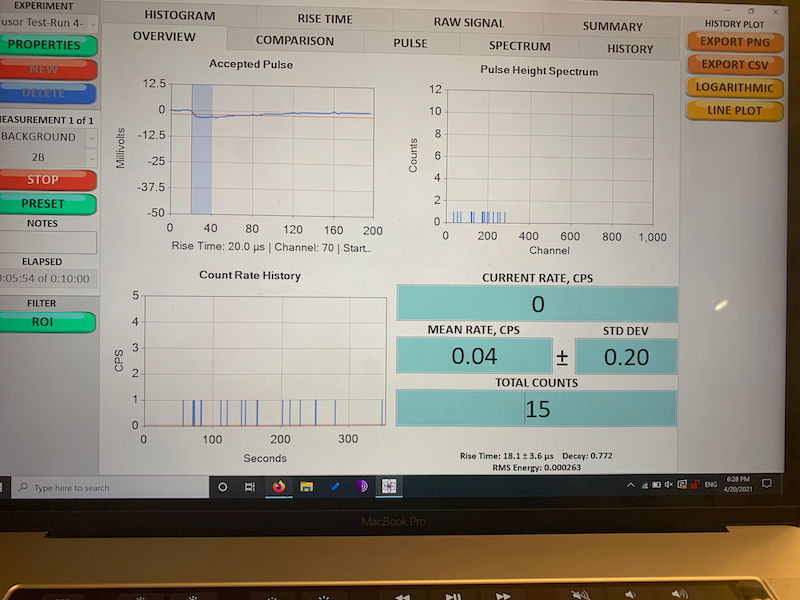 A trial run of the neutron counting software. Outside of the fusor, it picks up on various random neutrons which are spontaneous emissions from the sun or outer space which reach the surface. They are not frequent enough to cause harm.
Another one of my additions was installing a SCRAM button for emergency shutoffs. SCRAM stands for “Safety Control Rod Axe Man,” supposedly because in the first nuclear reactors, where the control rods were suspended by ropes, a designated person stood nearby with an axe, ready to cut the ropes and drop the rods to halt the reaction in an emergency; this person was the control rod axe man.
Another contribution was grounding every component of the fusor. Because the vacuum chamber itself acts as the outer grid of the fusor, it has a dangerously high electric voltage running through it during operation. To ensure safety, I had to ensure every component of the fusor was grounded. This prevented the chassis from becoming an electrocution hazard and protected our control electronics.
Results
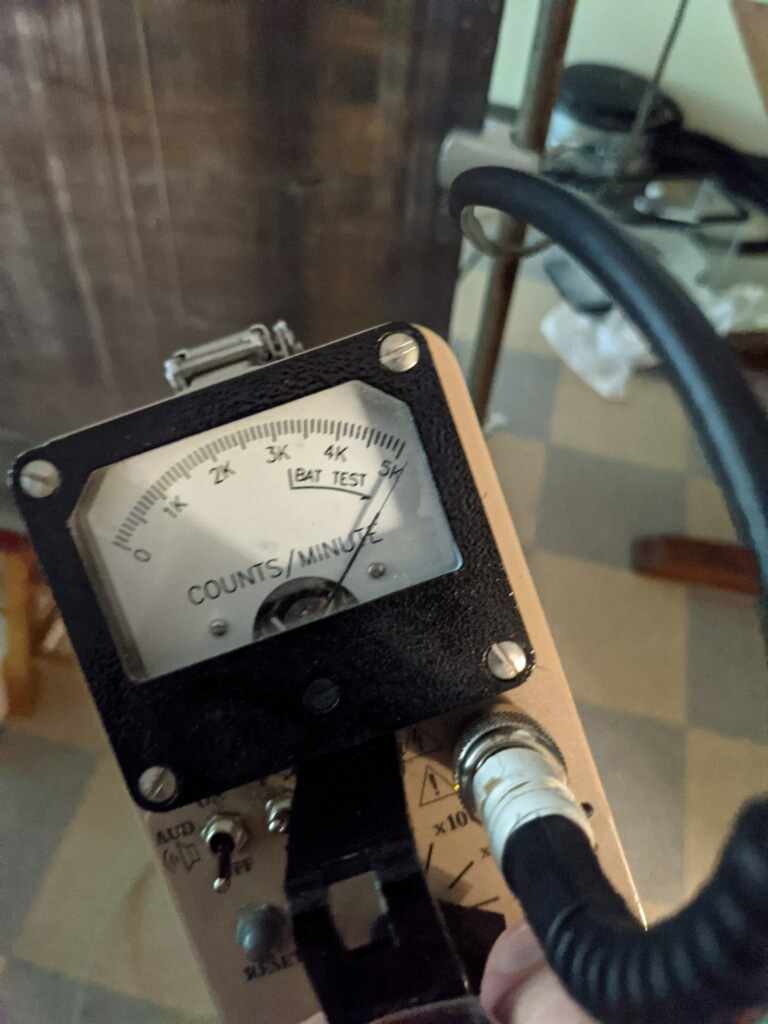 An active neutron detector picking up elevated neutron counts! Evidence of fusion! In the background you can see that by this point the fusor was shielded to prevent any radiation leakage.
About a year after we began, we turned on the fusor and registered high neutron counts on the device, proving that the fusion of hydrogen into helium was occurring and releasing neutrons as an output. The project was a success!
When most people think of nuclear reactors, they think of power generation. This was never an objective for our project. Nuclear power generation facilities all use nuclear fission (where heavy elements become lighter ones), completely distinct from fusion. Many scientists around the world, including Los Alamos national laboratory and ITER, are actively working to get fusion to a point where it can be used for power generation. If this is ever possible, it would be a revolutionary moment for humanity.
Achieving fusion as an undergraduate team was an incredible milestone, and the lessons learned in engineering, computer science, and experimental physics continue to influence my work today. I highly recommend that anyone interested also tries at least to get to the plasma step— I’ve read reports of people doing this on their own with relatively small budgets. The best place to start is by reading the fusor.net forums.